

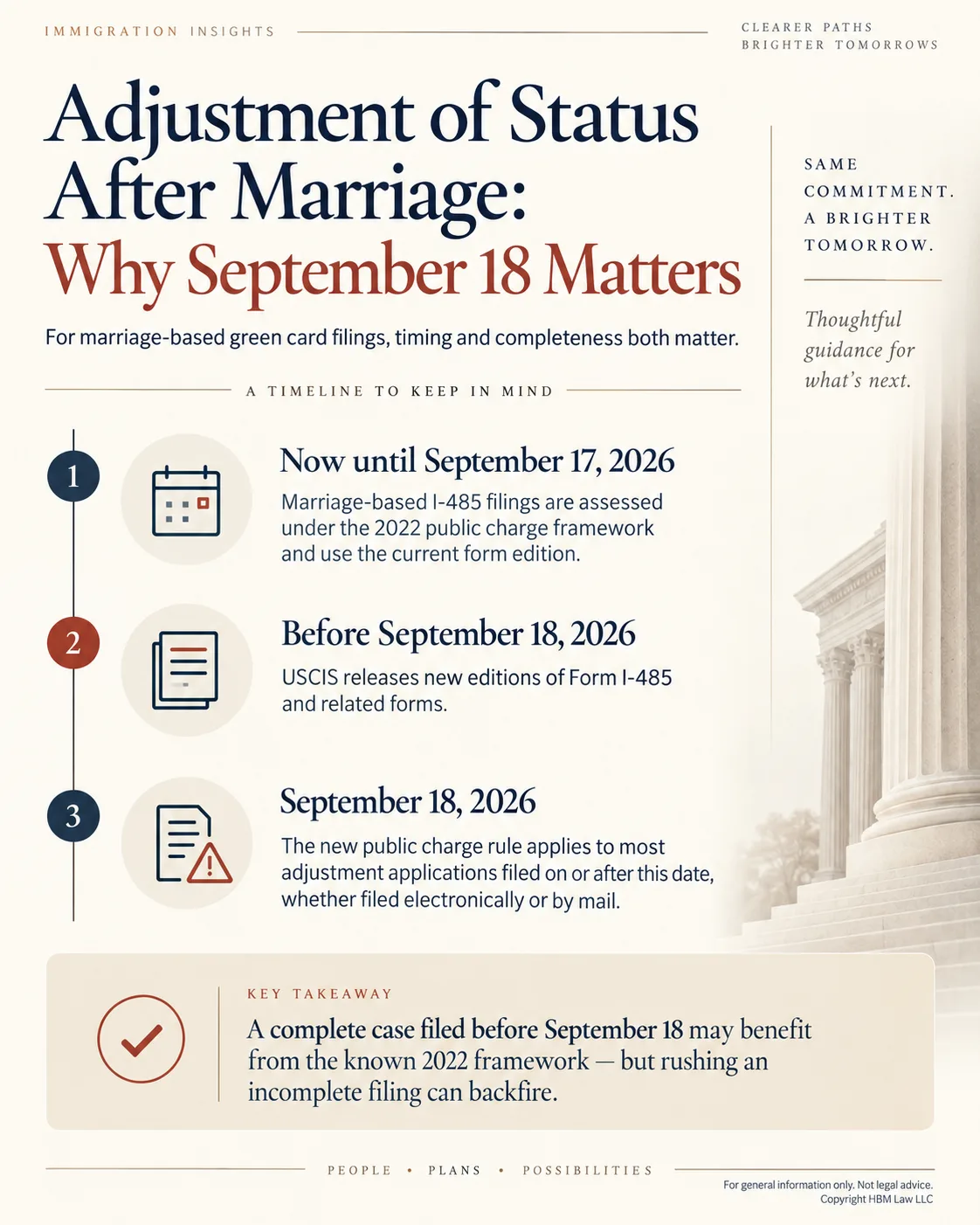
Adjustment of status after marriage is the process that lets the spouse of a US citizen apply for a green card from inside the United States, usually by filing the I-130 petition and the I-485 application together. It is the path most of our clients take, and for the next few weeks it comes with a date circled in red: September 18, 2026.
Two federal changes converge on that date and the days around it. Here is what is changing, why filing before the date can genuinely help, and why rushing an incomplete filing would be the wrong lesson to draw.
A quick refresher on how it works
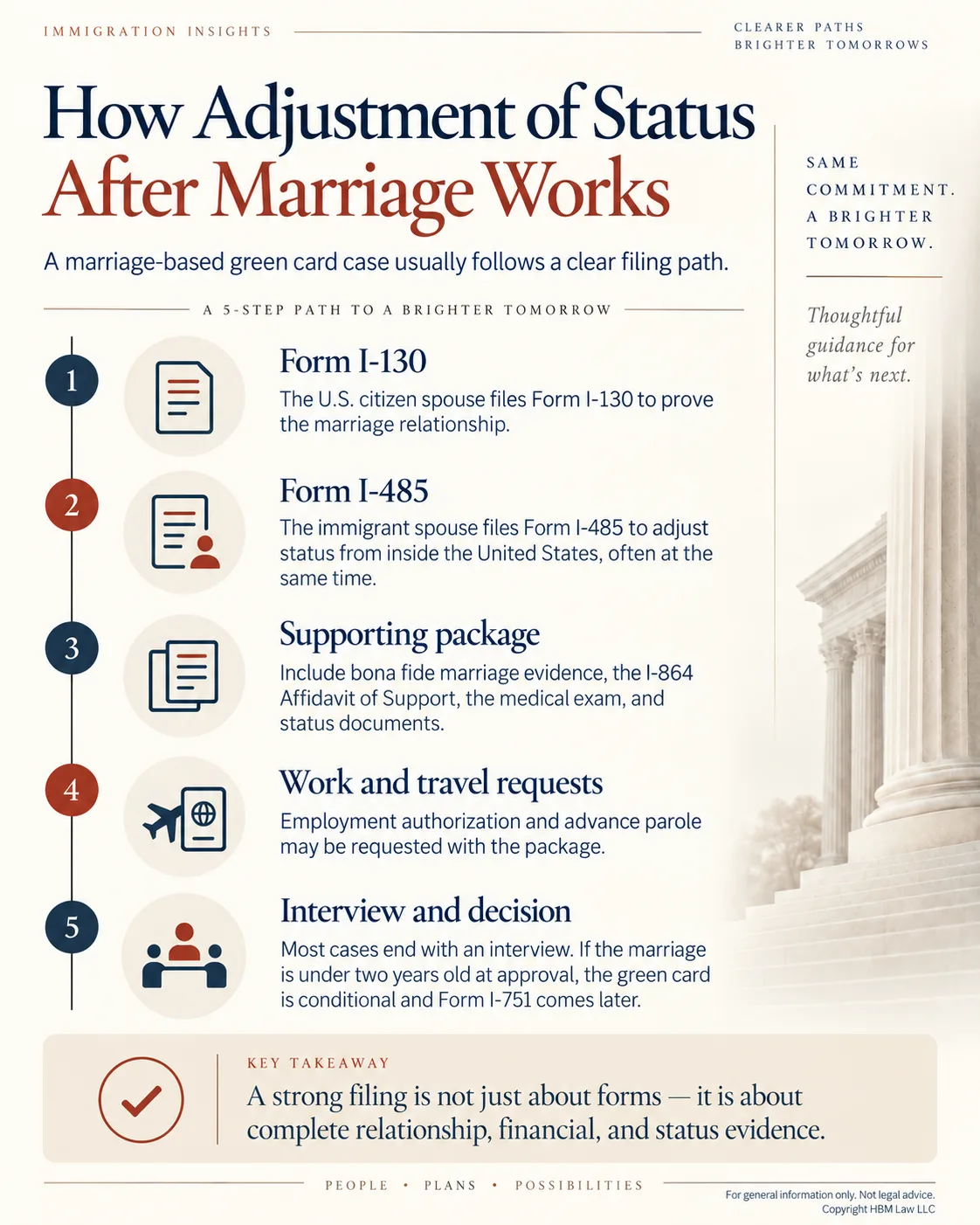
In a typical marriage based case, the US citizen spouse files Form I-130 to establish the relationship, and the immigrant spouse files Form I-485 to adjust status, usually at the same time. The package includes proof the marriage is genuine, the I-864 Affidavit of Support, the medical examination, and status documents. Work and travel permission can be requested alongside, and the case generally ends with an interview. If the marriage is under two years old at approval, the green card is conditional and Form I-751 comes later.
What changes on September 18
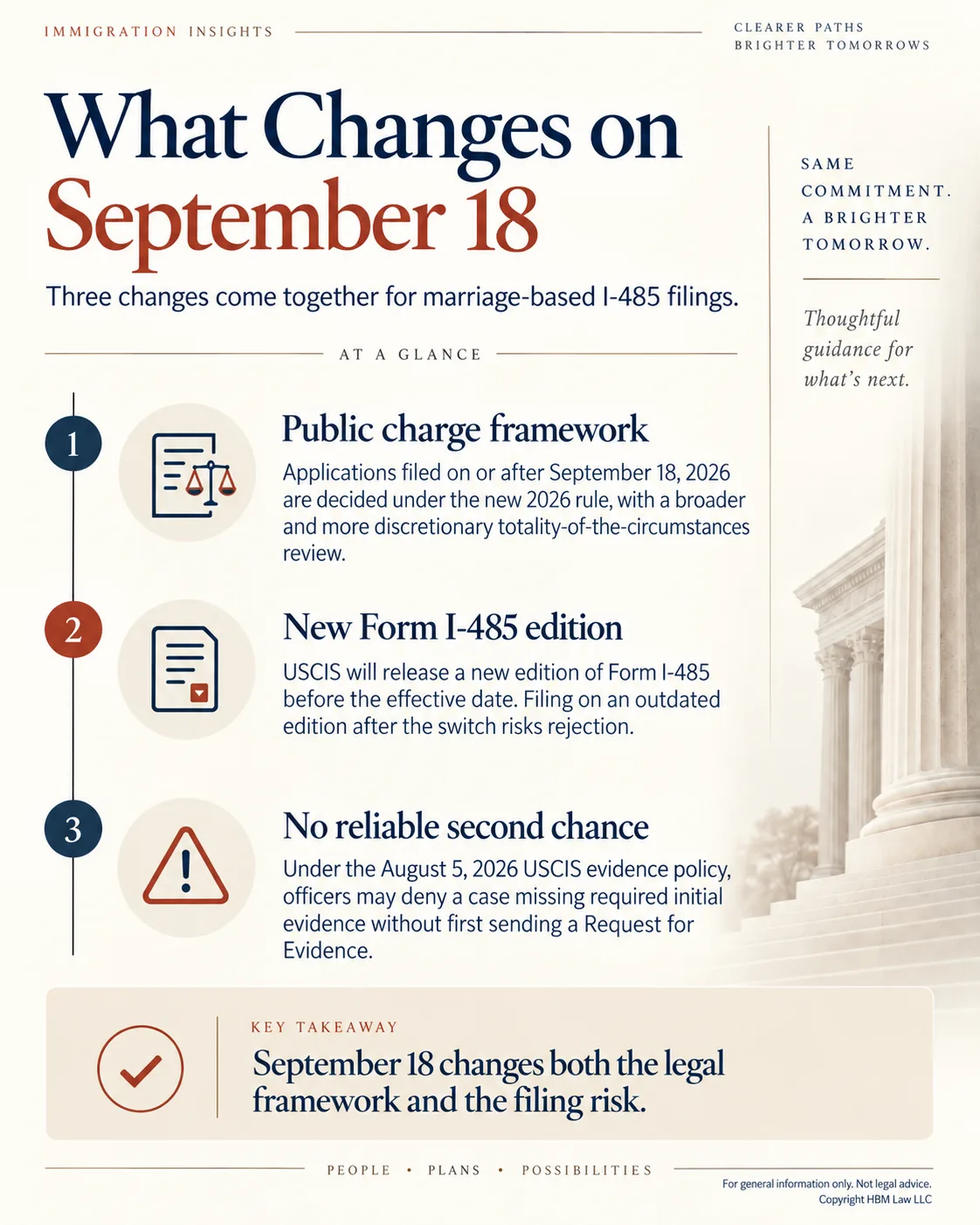
Three things: First, the public charge framework changes. Applications filed on or after September 18 are decided under the new 2026 rule, a discretionary, totality of the circumstances review with a much broader lens on means tested benefits and self sufficiency. Applications filed before that date stay under the narrower 2022 public charge framework.
Second, the paperwork changes. USCIS will release a new edition of Form I-485 before the effective date. Once the switch happens, filings on the outdated edition risk rejection, and rejected packages lose their place in line.
Third, the evidence climate has already changed. Under a policy alert issued on August 5, 2026, USCIS officers may deny a case that is missing required initial evidence without first sending a Request for Evidence. There is no longer a reliable second chance to complete a thin filing.
Why filing before the date can help
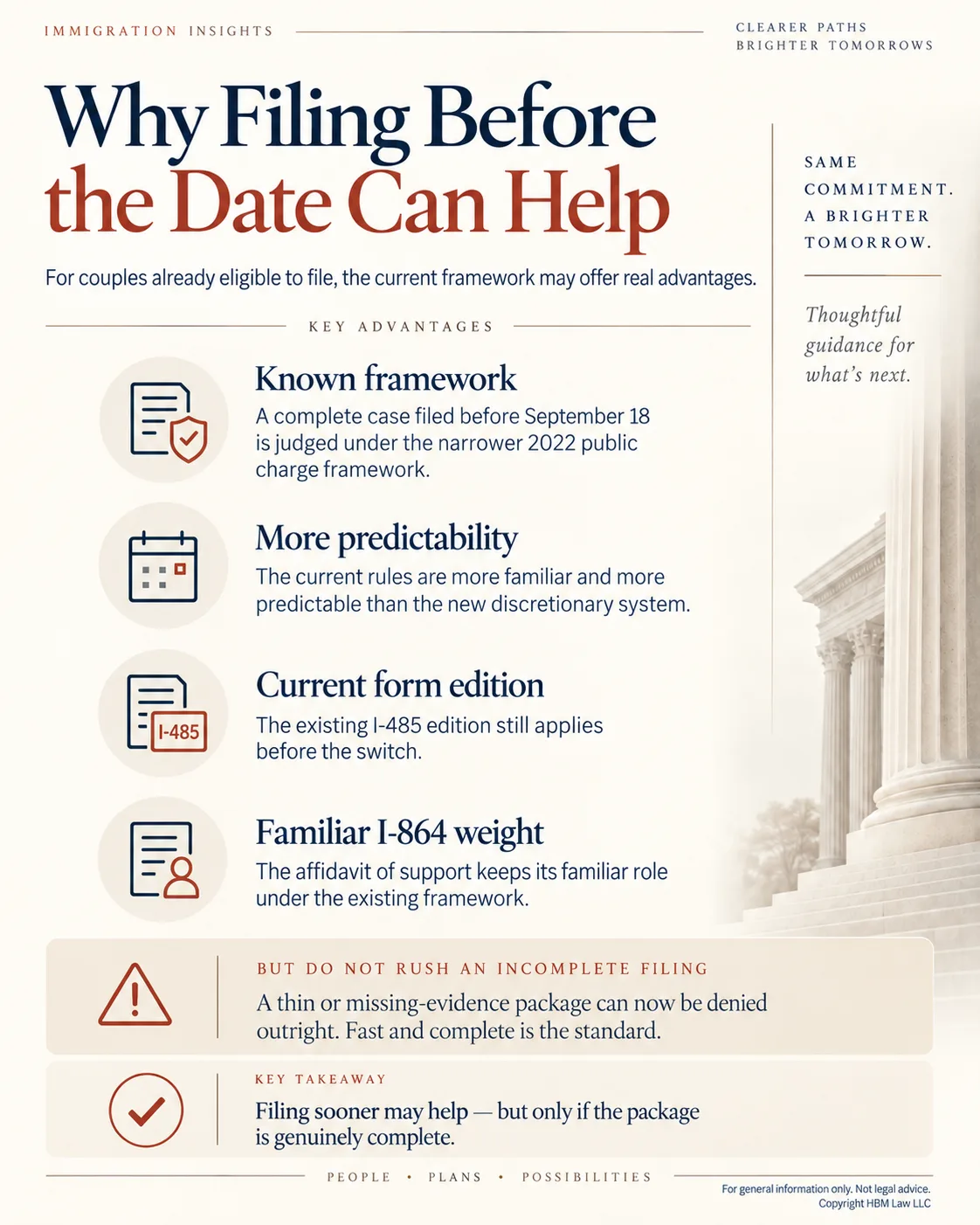
A complete case filed before September 18 is judged under rules that are known, narrower, and predictable. The benefit disclosure scope is smaller, the affidavit of support carries its familiar weight, and the current form edition applies. None of this makes a weak case strong, and interviews are already probing financial questions more deeply, but for a family that is eligible today, filing under the existing framework is a real and legitimate advantage.
But Do Not Rush an Incomplete Filing
The August 2026 USCIS evidence policy is the counterweight. A package assembled in a panic, missing a required document, can now be denied outright, with filing fees lost and months added. Fast and complete is the standard, and that is a preparation problem, not a luck problem. A strong marriage based filing typically needs three to four weeks of focused document gathering: relationship evidence across the life of the marriage, complete sponsor financials for the I-864, the medical exam, and clean copies of every status document.
If You Cannot File Before the Date
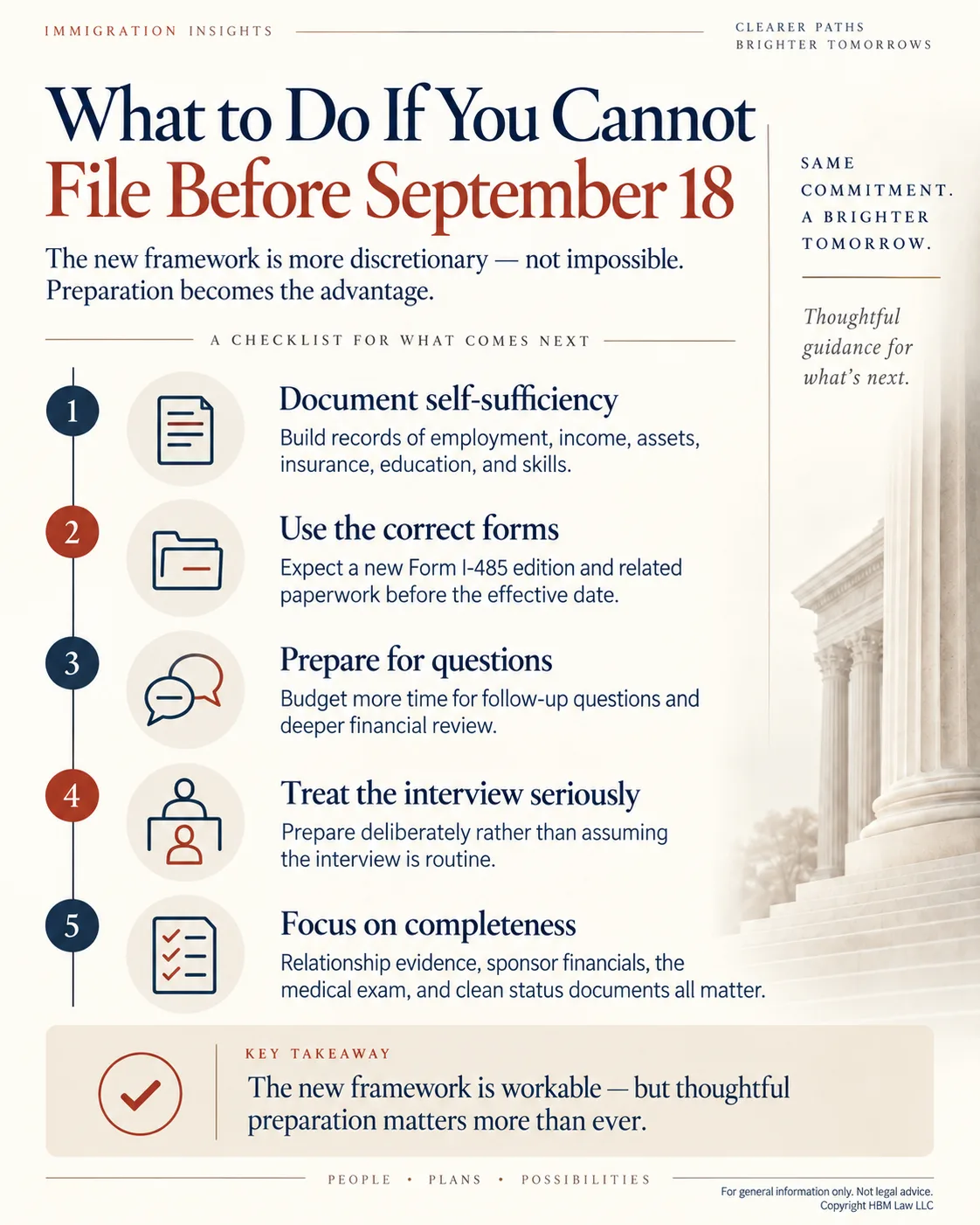
Many couples simply will not be eligible in time, and that is fine. The new framework is more discretionary, not impossible. The work shifts to documenting self sufficiency: employment, income, assets, insurance, education, and skills, presented deliberately. Build the record now, budget more time for questions, and treat the interview as something to prepare for rather than attend.
Frequently asked questions
We already filed our I-485. Does the new rule reach back to us?
No. The new public charge rule applies to applications filed on or after September 18, 2026. Pending cases stay under the 2022 framework, though financial questions at interview may be more detailed than they used to be.
Will my spouse’s income still count?
Yes. The I-864 Affidavit of Support is still required and an insufficient one still causes a public charge finding. Joint sponsors remain available. What has changed is that officers have discretion in how much positive weight a sufficient affidavit receives under the new rule.
We married very recently. Is that a problem?
A recent marriage is not a bar, but it raises the importance of bona fide marriage evidence and interview preparation. This is an area where our practice invests heavily, including mock interviews before the real one.
Legal citation: Public Charge Ground of Inadmissibility Final Rule, 91 Fed. Reg. 45327 (July 20, 2026); USCIS Policy Alert PA-2026-05 (August 5, 2026).
This article provides general information about recent changes in immigration law and policy. It is not legal advice and does not create an attorney client relationship. Immigration outcomes depend on the specific facts of each case. For advice about your situation, schedule a consultation with a licensed immigration attorney.